
Article body analysed
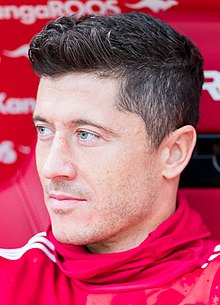
La Liga This season may well be Robert Lewandowski's last with Barcelona Pablo Rodriguez/Quality Sport Images/Getty Images In Saturday’s 3-0 home win against Mallorca, seven of Barcelona’s starting XI were La Masia graduates. Barca’s philosophy has always been to promote as many players as possible from their famous youth academy, but in recent years the number of youngsters coming through to the senior side seems to have accelerated. Advertisement In that La Liga victory at the weekend, you had Alejandro Balde, Pau Cubarsi and Eric Garcia in defence, and Marc Casado, Dani Olmo (who was at the club early in his youth career but moved to Dinamo Zagreb at 16 then re-signed from RB Leipzig in 2024) and Fermin Lopez in midfield. On the right wing, 18-year-old Lamine Yamal scored a brilliant goal as he passed 10, 000 minutes of game time in a Barcelona first-team shirt — it was his 136th appearance since making his debut, aged 15, in April 2023. Two more La Masia old boys came off the bench — Marc Bernal and Tommy Marques, the latter making his senior debut. Marques, 19, is the eighth academy graduate promoted to the first team under Hansi Flick since the German was named manager in May 2024. La Masia is possibly the most successful player factory in the world — it is certainly one of the most useful. But it has one glaring shortcoming. It doesn’t tend to produce strikers. Bojan Krkic, who made his Barca debut as a 17-year-old in 2007, is the most recent centre-forward to come out of the academy and enjoy any degree of continuity in Barcelona’s first team. He played a total of 163 matches and scored 41 goals across four seasons, but two-thirds of those appearances were as a winger. He never really settled in the side, and ended up being sold to Roma in 2011 at age 20. Another promising case was that of Marc Guiu. When he made his Barcelona debut off the bench against Athletic Club at 17 in October 2023, it took him 23 seconds to score his first goal. But at the end of that season, he moved on to Chelsea in search of greater playing time. Barcelona’s current first-choice No 9, Poland international Robert Lewandowski, turns 38 in August and is likely playing his final season at Barcelona, with his contract expiring at the end of June and no sign of renewal talks. Ferran Torres, a 25-year-old who came through the youth ranks at Valencia and then Manchester City before joining Barca at age 21, has played as a central forward but his natural position is on the wing. Barcelona’s best strikers in the years before Lewandowski arrived in summer 2022 all had one thing in common: Luis Suarez, David Villa, Samuel Eto’o, Patrick Kluivert, Ronaldo and Romario were not trained by Barcelona. Advertisement Why is that? There are two major factors. First of all, let’s consider the ‘Barcelona model’ — and its restrictions. Barcelona’s youth coaches teach players to play in a very specific way: one that requires excellent technique, creativity and positional awareness. That is as true for goalkeepers and centre-backs as it is for the strikers. Jean Marie Dongou joined La Masia aged 13 in 2008. Born in Cameroon, he is now 30 but has been retired from football for almost two years. A centre-forward, he made three senior appearances for Barcelona in the 2013-14 season under Gerard Martino. “At Barca, you have to link up really well, ” he says. “Even the goalkeeper has to be good with his feet — so imagine (what is expected of) the strikers. “Training sessions are always held in tight spaces. We were taught like that from day one. All matches are designed for that purpose, and that’s why it’s difficult for players from outside to adapt; it’s a unique method. ” At Barcelona, centre-backs signed from elsewhere have often struggled to deliver the type of passing out from defence that is wanted. Very good goalkeepers have been rejected because they are not comfortable enough with the ball at their feet — something fundamental for how the Camp Nou club play. But according to Jordi Roura, La Masia’s director from 2014 to 2021, such strong emphasis on particular qualities can mean other ones are overlooked. “I remember that whenever an important player in the centre-forward position emerged (in the academy), alarm bells would immediately ring, ” he says. “Sometimes, you’d receive reports saying, ‘He’s a good player and all, but he only scores goals’. The suggestion was that a player who only scores goals doesn’t have ability, when that is the most important thing in football. “Sometimes it reaches a point where this obsession with excellence, with the Barcelona DNA, can lead to situations that are somewhat misguided. I’d say, ‘Well, if he only scores goals, let’s take a look at him, because goals are the most important thing on the market’. ” Advertisement Perhaps for this reason, several players who began at La Masia as centre-forwards were converted to other positions. That was the case with Olmo, who now operates as an attacking midfielder or even a winger. At youth level at Barca, the emphasis on link-up play and connecting with others means responsibility for goalscoring is often shared out among the group — and this results in a more versatile set of attacking players. But it might also mean, when it comes to promoting to the first team, that the profile of a serial goalscorer is missing. “At Barcelona, we’re looking for a profile (of striker) who can also link up, who can come and receive the ball. Sometimes that No 9 typical of other teams here becomes a false nine, ” Roura says. “What we ask of them, which is essential and basic, is that they are goalscorers — but without giving up the work of initiating the press. We are also looking for a profile who can maintain the continuity of play, who will come to receive the ball in midfield, who is capable of linking up with others, who plays well with his back to goal. ” There is another factor involved here, and one not unique to Barcelona. When it comes to playing for the first team, nobody has time to wait for a goalscorer to develop their craft. They need to come in when opportunity knocks and hit the ground running. Roura describes the striker’s role as “a make-or-break position”. Dongou, who had the task of trying to force himself into a side where Lionel Messi was established as a false nine, agrees. “There isn’t as much patience with strikers, ” he says. “A midfielder comes on and can be a complement to the team, can play half an hour, 40 minutes, can take it slowly. A striker has to perform immediately. You don’t have the time you need to prove yourself. When you join the first team, you’re playing alongside the best footballers in the world. If you play a lot, it’s because one player is missing. And unless you’re someone like Lamine, you can’t break down the door. Advertisement “For me, it was a natural process to train with the first team, to make my debut… but then I got stuck. When I made my debut, I thought I had already done it, that I already had it all. But to play for Barca’s first team, you have to stay there. And that was really hard for me. “There was a lot of competition, but there was no fixed centre-forward until Luis Suarez arrived (in July 2014). Messi was playing as a false nine, sometimes Alexis (Sanchez). At that moment, I think there was space, and I didn’t take advantage of it. I didn’t know how to take advantage of it. ” After making three appearances from the bench across December 2013 and January 2014 — in La Liga, the Copa del Rey and the Champions League — Dongou did not play for the first team again. He eventually left the club in 2016, joining Real Zaragoza, and spent the rest of his career with several Spanish second-tier teams and clubs in Finland, Greece and Japan. He adds: “When Luis Enrique arrived as manager in 2014 — and for any youth player, he is the best coach there is — I didn’t know how to take advantage of it. Pre-season came around, I had some physical problems and two team-mates got ahead of me (in the pecking order). Instead of fighting to get back into the first team, I let myself go and refused to train with the first team because I was disappointed that others had moved ahead of me. It was a mistake of youth, an unforgivable mistake, and I paid for it. “At that moment, I was the favourite, the promise, and I had to rise to the occasion, but then what happened, happened. Others overtook me, and I didn’t know how to react. ” One match in particular is celebrated when it comes to the power of Barcelona’s academy. On November 25 2012, 10 players developed at La Masia were in the starting XI for a La Liga match away to Levante. When Dani Alves had to come off after 15 minutes, he was replaced by another — Martin Montoya — to complete a full team. Advertisement Recent discoveries at La Masia have once again put the spotlight on the academy, especially with the emergence of Pau Cubarsi, Fermin, Gavi and, of course, Yamal. Flick has also given debuts to Bernal, Marques, Sergi Dominguez, Andres Cuenca, Toni Fernandez, Dani Rodriguez, Jofre Torrents and Dro Fernandez — who left for Paris Saint-Germain last month. Oscar Gistau, 18 next month, is the striker described in most glowing terms around the academy right now. However, when it comes to finding a replacement for Lewandowski, the most likely outcome is that the club will bring in a new signing proven at senior level, an experienced guy who can fit their style of play, but most of all score goals — without delay. Even still, Dongou wants us to remember: “We mustn’t forget that when the club is struggling, it’s always La Masia that saves the day. It’s the cornerstone of Barca. ” Spot the pattern. Connect the terms Find the hidden link between sports terms Play today's puzzle Before joining The Athletic as a football writer, Laia Cervelló worked at Diario Sport reporting on FC Barcelona for four years. She has also worked for another four years for Be IN SPORTS Spain and GOLTV. She began her career as a journalist at 'betevé', the public television station in Barcelona, where she spent almost nine years. Follow Laia on Twitter @Laia_Cervello